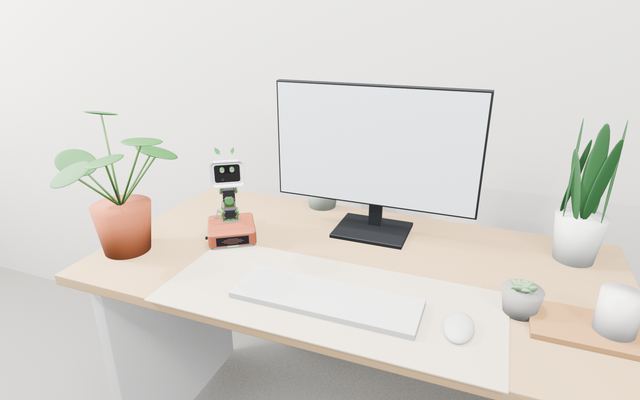
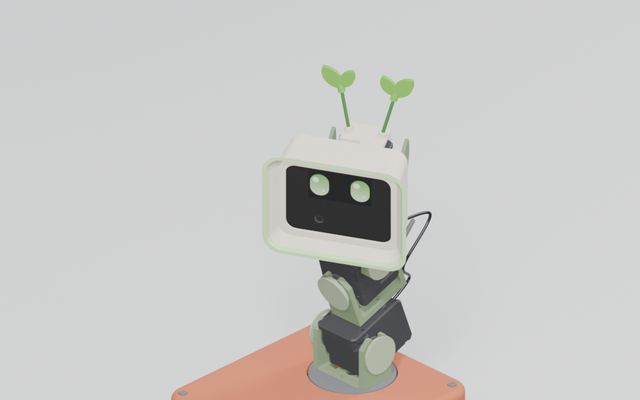
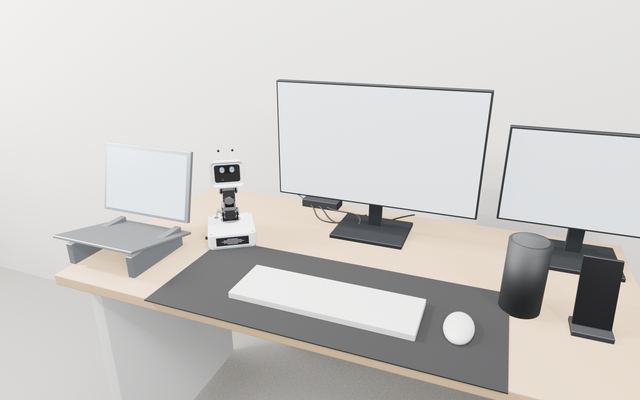
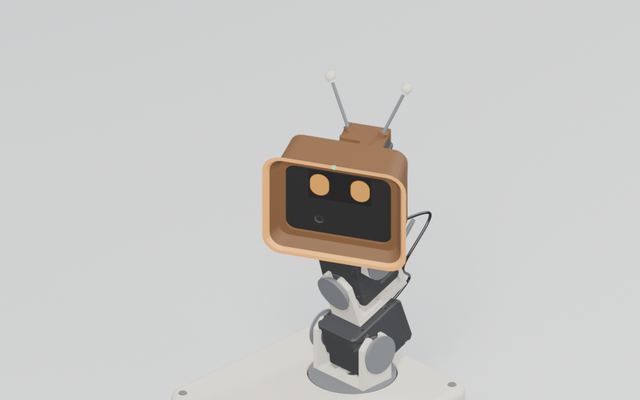
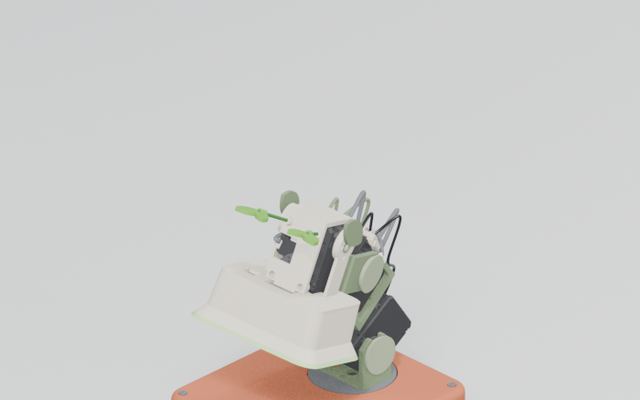
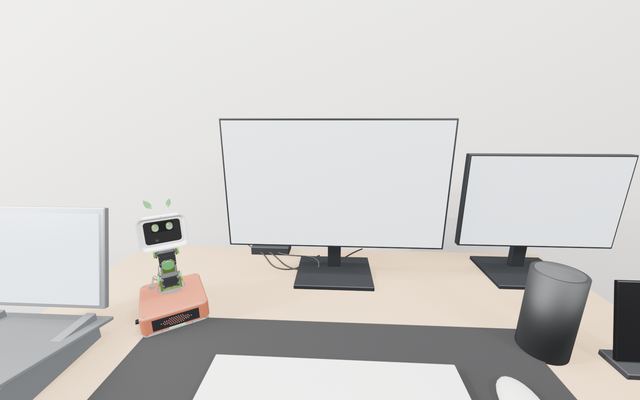
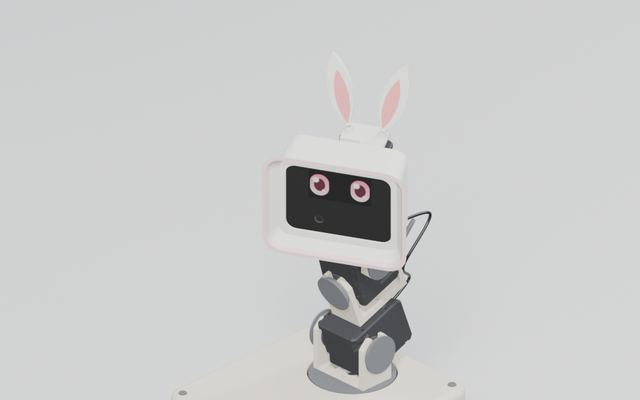
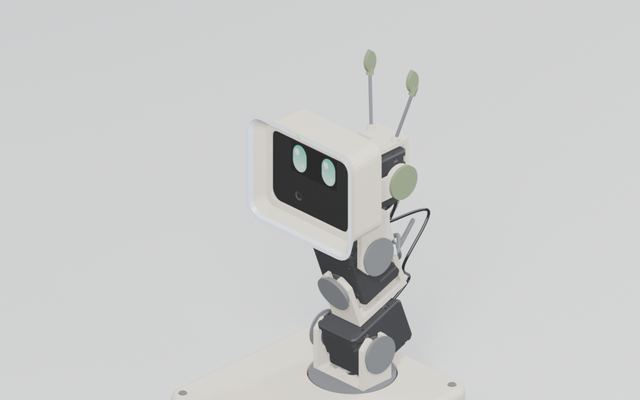
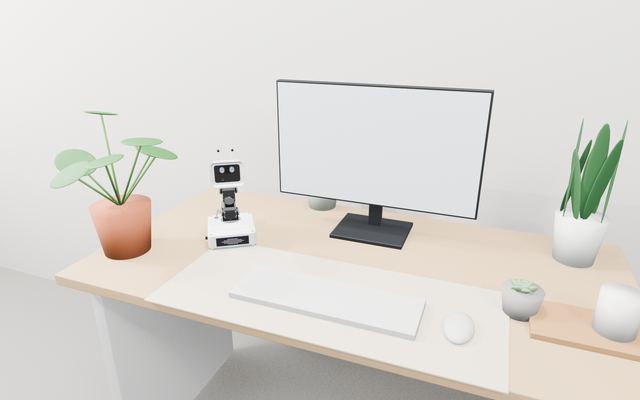
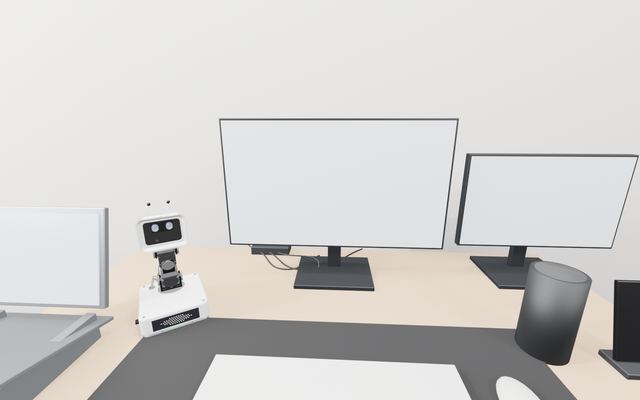
A desk robot that coaches posture faces two demands that may pull against each other: it should belong in a person's workspace for weeks, and its cues should be noticed while the person is busy with something else. Research on scene perception suggests that objects which fit their surroundings attract less attention, and that slow changes can go unnoticed altogether; research on human–robot interaction suggests that robots whose appearance fits the task and setting are trusted and obeyed more. We bring these together in one prediction: a robot whose form is congruent with its workspace is noticed later when it cues gradually, but its cues are followed more often — and an abrupt onset of motion removes the noticing cost. A six-joint desk robot with identical joints, motions and display face wears either a botanical or a technical skin (between participants) and stands on a plant-rich and on a device-heavy desk (within participants), so that congruence is the skin × desk interaction rather than a property of either skin. While participants transcribe text, the robot answers their slouching with gradual or abrupt cues. [RESULT: N = …; congruent pairings were noticed … s later for gradual cues, not for abrupt cues; cues were followed in …% vs …%]. We argue that spatial harmony is a design dimension with a measurable attentional price, and that the timing of motion onset is the lever that lets a designer keep the harmony and pay the price only when a cue matters.
자세를 코칭하는 책상 로봇에게는 서로 부딪칠 수 있는 두 가지 요구가 있습니다. 몇 주 동안 사람의 작업 공간에 어울려야 하고, 동시에 사람이 다른 일에 몰두해 있을 때도 신호가 눈에 띄어야 합니다. 장면 지각 연구에 따르면 주변과 어울리는 물체는 주의를 덜 끌고, 천천히 일어나는 변화는 아예 알아차리지 못할 수도 있습니다. 반면 인간–로봇 상호작용 연구는 과업과 환경에 어울리는 외형의 로봇을 사람들이 더 신뢰하고 더 잘 따른다고 말합니다. 우리는 이를 하나의 예측으로 묶습니다. 작업 공간과 어울리는 로봇은 천천히 신호할 때 더 늦게 알아차려지지만 그 신호는 더 자주 지켜지며, 움직임을 갑자기 시작하면 늦게 알아차리는 비용이 사라진다. 관절 · 동작 · 화면 얼굴이 모두 같은 6관절 책상 로봇이 식물형 또는 기계형 외형을 입고(참가자 간), 식물이 많은 책상과 기기가 많은 책상에 놓입니다(참가자 내). 그래서 "어울림"은 어느 한 외형의 성질이 아니라 외형 × 책상의 상호작용이 됩니다. 참가자가 글을 옮겨 치는 동안 로봇은 참가자가 구부정해지면 천천히 또는 갑자기 신호합니다. [결과: N = …; 어울리는 조합은 천천히 하는 신호에서 … 초 늦게 알아차려졌고 갑작스러운 신호에서는 차이가 없었다; 신호를 따른 비율 …% 대 …%]. 공간 조화성은 측정 가능한 주의의 대가를 지닌 디자인 차원이며, 움직임을 시작하는 타이밍은 디자이너가 조화를 지키면서 꼭 필요한 신호에만 그 대가를 치르게 해 주는 손잡이라고 주장합니다.
Research questions연구 질문
RQ1Does fitting the workspace cost a desk robot its noticeability?작업 공간과 어울리면 책상 로봇이 덜 눈에 띄는가?
RQ2When — for every cue, or only for cues without a sudden start?언제 그런가 — 모든 신호에서, 아니면 갑작스러운 시작이 없는 신호에서만?
RQ3Does fitting in buy anything back — more uptake, less annoyance — and through what: perceived fit, fluency, liking?어울림이 되돌려 주는 것이 있는가 — 더 많은 순응, 덜한 귀찮음 — 그리고 무엇을 통해서인가: 어울림 지각, 처리 유창성, 호감?
RQ4Net of both, which robot actually gets a slouching person to sit up?둘을 합쳐 보면, 구부정한 사람을 실제로 바로 앉게 하는 로봇은 어느 쪽인가?
What the paper would contribute이 논문의 기여
A trade-off, stated so it can fail. Scene-perception research and the HRI matching hypothesis make opposite predictions about a robot that fits in; we test both in one design.깨질 수 있게 쓴 트레이드오프. 장면 지각 연구와 HRI의 매칭 가설은 어울리는 로봇에 대해 반대 방향을 예측합니다. 한 설계에서 둘 다 시험합니다.
Congruence without confounds. Fit is manipulated as a skin × desk interaction with identical kinematics, checked online before the lab, with colour contrast and saliency measured per pairing.혼입 없는 어울림. 어울림을 동작이 같은 로봇의 외형 × 책상 상호작용으로 조작하고, 실험실 전에 온라인으로 확인하며, 조합마다 색 대비와 saliency를 잽니다.
A design lever. If the onset of motion removes the noticing cost, designers can keep harmony and pay for salience only when a cue matters.디자인 손잡이. 움직임의 시작이 알아차림 비용을 없앤다면, 디자이너는 조화를 지키면서 필요한 신호에만 눈에 띄는 비용을 치를 수 있습니다.
An open platform. Robot CAD, swappable skins, cue motions, stimuli, survey and analysis code are released.열린 플랫폼. 로봇 CAD, 갈아 끼우는 외형, 신호 동작, 자극, 설문, 분석 코드를 공개합니다.
Two pathways, one trade-off두 개의 경로, 하나의 트레이드오프
Congruence acts on two different systems. On the attentional side it lowers the robot's priority: an object that is semantically expected and visually similar to its surroundings is fixated later, and a slow change with no transient may not be seen at all. On the social side it raises acceptance: a robot that matches its setting is processed more fluently, liked more and obeyed more readily. The onset of motion bypasses the first pathway — it captures attention whatever the object means — so the cost should appear for gradual cues only.어울림은 서로 다른 두 체계에 작용합니다. 주의 쪽에서는 로봇의 우선순위를 낮춥니다. 의미상 예상되고 주변과 시각적으로 비슷한 물체는 늦게 시선을 받고, 끊김 없이 천천히 바뀌면 아예 보이지 않을 수 있습니다. 사회적 쪽에서는 수용을 높입니다. 환경에 맞는 로봇은 더 유창하게 처리되고, 더 호감을 얻고, 더 쉽게 따르게 됩니다. 움직임의 시작은 첫 번째 경로를 우회합니다 — 물체의 의미와 상관없이 주의를 끌기 때문에, 비용은 천천히 하는 신호에서만 나타나야 합니다.
Congruence skin × desk어울림 외형 × 책상
Path A · attentional priority ↓ scene consistency, feature similarity경로 A · 주의 우선순위 ↓ 장면 일관성, 색 · 질감 유사
Gradual cues noticed later천천히 하는 신호를 늦게 알아차림H1
Congruence skin × desk어울림 외형 × 책상
Path B · fit, fluency, liking ↑ matching hypothesis경로 B · 어울림 지각 · 유창성 · 호감 ↑ 매칭 가설
More uptake, less annoyance더 자주 따르고 덜 귀찮음H3 · H5
Abrupt onset 0.4 s head lift갑작스러운 시작 0.4초 고개 들기
Bypasses path A motion onset captures attention경로 A를 우회 움직임 시작은 자동으로 주의를 끈다
No noticing cost알아차림 비용 없음H2
A robot that fits in may be seen later어울리는 로봇은 늦게 보일 수 있다
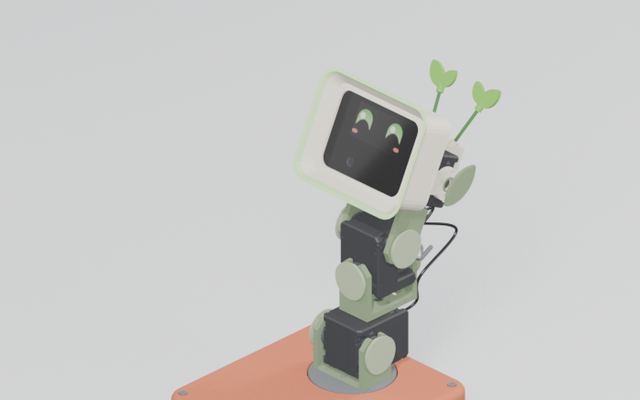
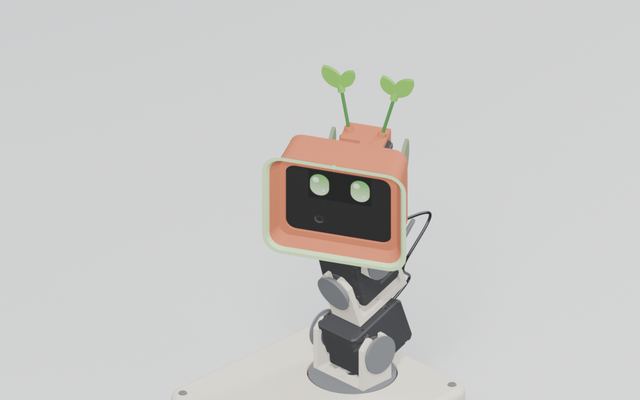
Changes slow enough to make no transient can go unnoticed (Simons, Franconeri & Reimer, 2000), and objects that fit a scene draw fewer fixations. But the onset of motion captures attention automatically (Abrams & Christ, 2003). The robot therefore cues in two ways — the same slump, with and without a sudden start. Both are the live digital twin; drag to orbit.끊김 없이 천천히 바뀌는 변화는 놓칠 수 있고(Simons, Franconeri & Reimer, 2000), 장면과 어울리는 물체는 시선을 덜 받습니다. 하지만 움직임이 시작되는 순간은 자동으로 주의를 끕니다(Abrams & Christ, 2003). 그래서 로봇은 두 가지로 신호합니다 — 같은 처짐 동작을, 갑작스러운 시작 없이 / 있이. 둘 다 실제 디지털 트윈이며 드래그해서 돌려 볼 수 있습니다.
Gradual cue천천히 처지는 신호
An 8-second slump under 10°/s, then a concerned look up — no transient to catch the eye.8초 동안 초당 10° 이하로 구부정해진 뒤 걱정스러운 얼굴로 올려다봅니다 — 눈길을 끌 순간이 없습니다.
Abrupt cue갑자기 시작하는 신호
A 0.4-second head lift first, then the same slump — the onset itself is the signal.0.4초 동안 고개를 번쩍 든 뒤 같은 동작 — 시작하는 순간 자체가 신호입니다.
Both motions pass the twin's joint-limit, speed and collision checks; neither has run on hardware.두 동작 모두 트윈의 관절 한계 · 속도 · 충돌 검사를 통과했고, 실물 로봇에서는 아직 돌리지 않았습니다.
Congruence is an interaction, not a look어울림은 외형이 아니라 조합이다
If we only compared a plant-like robot with a mechanical one, any difference could come from its colour, leaves or size. So each skin stands on both desks: congruence is the skin × desk interaction, and everything that belongs to one skin cancels out.식물 같은 로봇과 기계 같은 로봇만 비교하면, 차이가 색 · 잎 · 크기 때문인지 알 수 없습니다. 그래서 각 외형을 두 책상 모두에 놓습니다. 어울림은 외형 × 책상의 상호작용이 되고, 한 외형에만 속한 차이는 상쇄됩니다.
Plant-rich desk식물이 많은 책상
Device-heavy desk기기가 많은 책상
Botanical식물형
congruent어울림
incongruent안 어울림
Technical기계형
incongruent안 어울림
congruent어울림
Botanical · plant-rich (congruent)식물형 · 식물 책상 (어울림)
Three confirmatory hypotheses carry the paper; three secondary ones explain it; two exploratory ones look for boundaries. All are pre-registered with their test before any data.확인적 가설 3개가 논문의 뼈대이고, 2차 가설 3개가 그 이유를 설명하며, 탐색 가설 2개가 경계를 찾습니다. 모두 데이터 전에 검정 방법과 함께 사전등록합니다.
Prediction예측
Why근거
Test · refuted if검정 · 반박 조건
Confirmatory확인적
H1
Gradual cues are noticed later in congruent pairings.천천히 하는 신호는 어울리는 조합에서 더 늦게 알아차린다.
Lower priority for scene-consistent, similar-looking objects; a slow change has no transient.장면에 맞고 비슷해 보이는 물체는 우선순위가 낮고, 천천히 바뀌면 끊김 신호가 없다.
LMM on log time-to-notice (gradual cues), skin × desk. Refuted if ≤ 0 or p ≥ .05.천천히 하는 신호의 알아차림 시간(로그) 혼합모형, 외형 × 책상. 0 이하이거나 p ≥ .05면 반박.
H2
The effect is larger for gradual than abrupt cues, and practically zero for abrupt ones.그 효과는 천천히 하는 신호에서 더 크고, 갑작스러운 신호에서는 사실상 0이다.
Motion onset captures attention regardless of what the object means.움직임 시작은 물체의 의미와 무관하게 주의를 끈다.
Skin × desk × onset; equivalence (TOST) within abrupt cues, bounds ±0.10 log.외형 × 책상 × 시작 방식; 갑작스러운 신호 안에서 동등성 검정(±0.10 로그).
H3
Once noticed, cues are followed more often and the robot is found less annoying in congruent pairings.알아차린 뒤에는 어울리는 조합에서 더 자주 따르고 덜 귀찮게 느낀다.
Matching hypothesis; fluent, fitting objects are liked and trusted more.매칭 가설; 유창하게 처리되는 어울리는 대상은 더 호감 · 신뢰를 얻는다.
GLMM on correction within 60 s of the first glance; LMM on annoyance (A1–A3).처음 쳐다본 뒤 60초 안 교정 여부 로지스틱 혼합모형; 귀찮음(A1–A3) 혼합모형.
Secondary2차
H5
The uptake benefit runs through perceived fit and liking.순응 이득은 어울림 지각과 호감을 거쳐 생긴다.
If path B is real, removing fit and liking should remove most of H3.경로 B가 맞다면, 어울림 지각과 호감을 빼면 H3 대부분이 사라져야 한다.
Multilevel mediation (F1–F3, G1–G5); bootstrap CI of the indirect effect excludes 0.다수준 매개분석(F1–F3, G1–G5); 간접효과 부트스트랩 신뢰구간이 0을 포함하지 않음.
H6
People learn to watch the robot: time-to-notice falls over cues, and the congruence cost shrinks.사람들은 로봇을 지켜보는 법을 배운다: 알아차림 시간이 신호마다 줄고, 어울림 비용도 줄어든다.
Expectation can replace salience once the cue is known.신호를 알게 되면 기대가 눈에 띄는 정도를 대신한다.
Congruence × cue index on gradual time-to-notice (negative).천천히 하는 신호의 알아차림 시간에서 어울림 × 신호 순번 (음의 방향).
H7
Net effect: a correction within 2 min of the slouch is most likely for congruent + abrupt; for gradual cues cost and benefit cancel.순효과: 구부정해진 뒤 2분 안 교정은 어울림 + 갑작스러운 조합에서 가장 높고, 천천히 하는 신호에서는 비용과 이득이 상쇄된다.
Abrupt onset removes the cost (H2) while fit keeps the benefit (H3).갑작스러운 시작이 비용을 없애고(H2) 어울림이 이득을 유지한다(H3).
GLMM on end-to-end correction; planned contrast congruent-abrupt vs each other cell.처음부터 끝까지의 교정 여부 로지스틱 혼합모형; 어울림-갑작스러운 조합 대 나머지 계획 대비.
Exploratory탐색
H4
Abrupt cues cost more typing in the next 30 s.갑작스러운 신호가 직후 30초 타자를 더 방해한다.
Capture interrupts the primary task.주의 포획은 주 과제를 끊는다.
Words per minute, 30 s after vs before each cue.신호 전후 30초 분당 단어 수.
H8
Who finds what congruent: technology affinity favours the technical skin, plant affinity the botanical one — on perceived fit, not on noticing.누구에게 무엇이 어울리나: 기술 친화성이 높으면 기계형, 식물 친화성이 높으면 식물형을 더 어울린다고 본다 — 알아차림이 아니라 어울림 지각에서.
Congruence is in the eye of the beholder.어울림은 보는 사람에게 달려 있다.
ATI and plant-affinity items as moderators of skin × desk on F1–F3.ATI · 식물 친화성 문항을 F1–F3에 대한 외형 × 책상의 조절변수로.
What we expect to see예상되는 결과 모양
Time to notice. Congruence slows gradual cues (+42 %) and leaves abrupt ones alone.알아차림 시간. 어울림은 천천히 하는 신호만 늦추고(+42%), 갑작스러운 신호는 그대로 둡니다.Cues followed once noticed.알아차린 뒤 신호를 따른 비율.
congruent pairing어울리는 조합incongruent pairing안 어울리는 조합 · values are the assumptions used for the sample size, not data값은 표본 크기 계산에 쓴 가정이며 데이터가 아닙니다
Other explanations, and how the design rules them out다른 설명과, 설계가 그것을 배제하는 방법
If the effect came from…효과가 실은 …때문이라면
…then the design answers설계의 답
The botanical skin simply being greener or leafier식물형 외형이 그냥 더 초록이고 잎이 많아서
Congruence is the skin × desk interaction; any skin difference is a main effect and cancels.어울림은 외형 × 책상 상호작용이라, 외형 자체의 차이는 주효과로 상쇄됩니다.
One desk being busier than the other한 책상이 더 복잡해서
Desks are matched in object count, regions and luminance; a desk difference is a main effect (Study 0 shows it is large, and it cancels).물건 개수 · 위치 · 밝기를 맞췄고, 책상 차이는 주효과로 상쇄됩니다(Study 0에서 크게 나타나지만 상쇄).
Colour contrast, not meaning의미가 아니라 색 대비
ΔE and saliency are measured per pairing and enter as covariates; in our stimuli they are not aligned with congruence.조합마다 ΔE와 saliency를 재서 공변량으로 넣고, 이번 자극에서는 어울림과 겹치지 않습니다.
Participants learning to watch the robot참가자가 로봇을 지켜보는 법을 배워서
Desk order is counterbalanced and block is in the model; learning itself is tested (H6); first cues are analysed separately.책상 순서를 상쇄하고 블록을 모형에 넣으며, 학습 자체를 H6로 검정하고 첫 신호를 따로 분석합니다.
Guessing the hypothesis가설을 눈치채서
A cover story about typing; the end probe (E3) excludes anyone who states the hypothesis.타자 연구라는 표면 설명을 쓰고, 종료 질문(E3)에서 가설을 말하면 제외합니다.
Abrupt cues simply moving more갑작스러운 신호가 그냥 더 많이 움직여서
Both cues share the same slump; the abrupt one only adds a 0.4 s lift, and time-to-notice is timed from the first motion of each.두 신호는 같은 처짐 동작을 공유하고 갑작스러운 쪽은 0.4초 들기만 더해지며, 알아차림 시간은 각자의 첫 움직임부터 잽니다.
Method
Design. Skin (botanical / technical) between participants; desk (plant-rich / device-heavy) within, two 25-minute blocks in counterbalanced order; cue onset (gradual / abrupt) within blocks, 8 cues per block triggered by the participant's own slouch. N = 100 (50 per skin), pre-registered mixed models.설계. 외형(식물형 / 기계형)은 참가자 간, 책상(식물이 많은 / 기기가 많은)은 참가자 내로 25분 블록 2개(순서 상쇄), 신호 시작(천천히 / 갑자기)은 블록 안에서 참가자가 실제로 구부정해질 때 8회. N = 100(외형당 50명), 혼합효과 모형으로 사전등록 분석.
One session한 세션의 흐름
Consent, posture and gaze calibration동의, 자세 · 시선 보정
Block 1 · 25 min typing on desk A블록 1 · 책상 A에서 25분 타자
Questionnaire · 10 min break블록 후 설문 · 10분 휴식
Block 2 · 25 min on desk B, questionnaire, end probe, debrief블록 2 · 책상 B 25분, 설문, 종료 질문, 사후 설명
Survey instruments설문 문항
The exact wording participants will see (draft v1). Try them: the forms below are a preview — nothing is sent or saved. Korean is the participant language; the Godspeed items still need back-translation.참가자가 실제로 보게 될 문구입니다(초안 v1). 아래 양식은 직접 눌러 볼 수 있는 미리보기이며, 아무것도 전송하거나 저장하지 않습니다. 참가자 언어는 한국어이고, Godspeed 문항은 역번역 검증이 남아 있습니다.
Time to notice알아차림 시간 — from cue onset to the first glance at the robot (webcam gaze; the robot is a 7–10° target). Censored at 180 s.신호 시작부터 로봇을 처음 쳐다보기까지(웹캠 시선 추정, 로봇은 시야각 7–10°의 큰 표적). 180초에서 중단.
Uptake따름 — posture back within 2° of the participant's own upright baseline within 60 s of the first glance (second camera, keypoints only).처음 쳐다본 뒤 60초 안에 자세가 본인의 바른 자세 기준 2° 이내로 돌아왔는지(두 번째 카메라, 관절점만 사용).
Typing타자 — words per minute and errors in 30-s windows before and after each cue.각 신호 전후 30초 구간의 분당 단어 수와 오타.
Visual covariates시각 공변량 — the robot's colour contrast (CIELAB ΔE) and saliency in each pairing, from a photo at the participant's eye position.참가자 눈 위치에서 찍은 사진으로 조합별 로봇의 색 대비(CIELAB ΔE)와 saliency.
Privacy개인정보 — images are never stored; only gaze angles, keypoints and timestamps.영상은 저장하지 않고 시선 각도 · 관절점 · 시각만 남깁니다.
Preliminary checks사전 점검
Does visual similarity sneak in with congruence?어울림에 색 대비가 섞여 들어갔나?
Pairing조합
Congruent어울림
ΔE
Palette overlap팔레트 겹침
Saliency
botanical / plant식물형 / 식물
✓
26.9
0.44
×9.4
botanical / device식물형 / 기기
20.9
0.45
×5.2
technical / plant기계형 / 식물
21.4
0.45
×10.7
technical / device기계형 / 기기
✓
14.6
0.59
×6.3
Congruent minus incongruent: ΔE −0.4, saliency −0.12 — near zero, while the desk changes saliency about 4×. A noticing effect could not be explained by contrast alone.어울림 − 안 어울림: ΔE −0.4, saliency −0.12로 거의 0. 반면 책상은 saliency를 약 4배 바꿉니다. 알아차림 효과가 나와도 색 대비만으로는 설명되지 않습니다.
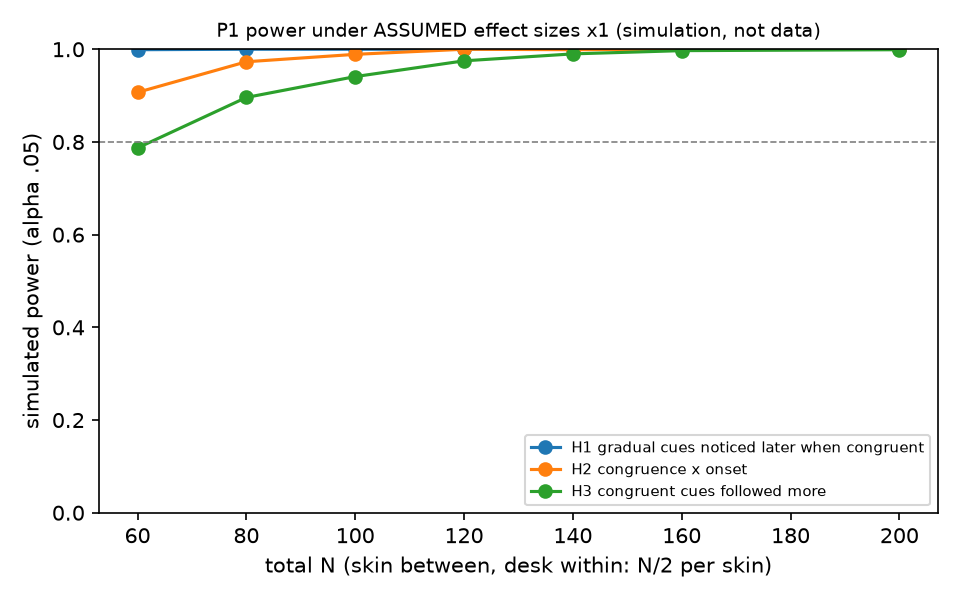
How many participants?몇 명이 필요한가?
N
All between전부 참가자 간
Desk within책상 참가자 내
Effects halved효과 절반
60
.66 / .65 / .59
1.00 / .91 / .79
.70 / .34 / .28
100
.88 / .85 / .82
1.00 / .99 / .94
.91 / .55 / .43
200
.99 / .99 / .98
1.00 / 1.00 / 1.00
.99 / .85 / .70
Simulated power for H1 / H2 / H3 under assumed effects (not data): gradual median time-to-notice 15 s, abrupt 2.5 s, +42 % when congruent; uptake 55 % → 68 %.가정한 효과(측정 아님)로 시뮬레이션한 H1 / H2 / H3 검정력: 천천히 하는 신호 알아차림 중앙값 15초, 갑작스러운 신호 2.5초, 어울릴 때 +42%; 따름 55% → 68%.
Where this sits선행연구 속 위치
Physical robot cue실물 로봇 신호
Varies appearance외형 조작
Varies the setting환경 조작
Measures noticing알아차림 측정
Measures uptake순응 측정
SitBot (2025) · Owro (2022)
✓
–
–
–
✓
Goetz, Kiesler & Powers (2003)
–
✓
–
–
✓
Service-robot congruity studies서비스 로봇 어울림 연구
–
✓
✓
–
–
Peripheral notification devices주변시야 알림 장치
✓
–
–
✓
–
This work이 연구
✓
✓
✓
✓
✓
From the abstracts and publisher pages we read; every cell will be checked against the full papers before submission.읽은 초록과 출판사 페이지 기준이며, 제출 전 모든 칸을 원문으로 확인합니다.
What else this robot can answer이 로봇이 이어서 답할 질문들
P2
Expressing Big Emotions in a Small Range
Cheap desk robots have small joint ranges. Clipping an animator's big motion keeps it safe but may destroy what it meant; we test whether handling the limits inside a flow-matching sampler keeps emotions recognisable.값싼 책상 로봇은 관절 범위가 좁아, 큰 감정 동작을 잘라내면 안전하지만 뜻이 망가질 수 있습니다. 흐름 정합(flow matching) 샘플러 안에서 제약을 다루면 감정 인식이 유지되는지 시험합니다.
P3
Tracking Error Is Not What People See
Cheap servos lag, overshoot and wobble. We measure the perceptual thresholds of these artefacts and build an error metric that predicts "as intended" judgements better than tracking error.값싼 서보는 늦고, 넘치고, 흔들립니다. 이 결함의 지각 문턱을 재서, 추종 오차보다 "의도대로 보이는가"를 더 잘 예측하는 오차 지표를 만듭니다.
P4
Does a Robot's Nudge Wear Off?
One robot moved between people's desks for weeks; at every slouch it is randomised to cue with body and face, face only, or not at all — does the effect fade?로봇 한 대를 몇 주씩 여러 사람 책상에 두고, 구부정해질 때마다 몸+얼굴 / 얼굴만 / 신호 없음을 무작위로 고릅니다 — 효과가 시간이 지나며 줄어드는가?
Current limitations현재의 한계
No data yet: the robot has not been built and no participant has been run.아직 데이터가 없습니다. 로봇을 만들지 않았고 참가자 실험도 하지 않았습니다.
Effect sizes are assumed; at half the assumed size, H2 and H3 are under-powered at N = 100.효과 크기는 가정입니다. 가정의 절반이면 N = 100에서 H2 · H3의 검정력이 부족합니다.
The lab desk is not the participant's own desk, and 2 × 25 minutes says nothing about weeks.실험실 책상은 참가자 자신의 책상이 아니고, 25분 두 번으로는 몇 주 뒤를 말할 수 없습니다.
These stimuli test only the semantic route of congruence; colour contrast was deliberately not confounded with it.이 자극은 어울림의 의미적 경로만 시험합니다. 색 대비는 일부러 섞지 않았습니다.
Self-review of the other three papers: P2's "first" claim was false and narrowed; P3 was a question and became a falsifiable claim; P4 was too costly and became a single-robot trial.나머지 세 논문의 자체검토: P2의 "최초" 주장은 틀려서 좁혔고, P3은 질문이라 반박 가능한 주장으로 바꿨으며, P4는 너무 비싸 로봇 한 대 시험으로 줄였습니다.
BibTeX
@misc{notifyi2026fitsin,
  title  = {Fits In, Stands Out? Workspace Congruence and the
            Noticeability of a Desk Robot's Posture Cues},
  author = {{Notifyi Team}},
  year   = {2026},
  note   = {Draft, pre-data},
  url    = {https://notifyii.github.io/notifyi-digital-twin/research.html}
}
Simons, Franconeri & Reimer (2000). Change blindness in the absence of a visual disruption. Perception.
Goetz, Kiesler & Powers (2003). Matching robot appearance and behavior to tasks to improve human-robot cooperation. RO-MAN.
Loftus & Mackworth (1978); Henderson, Weeks & Hollingworth (1999). Semantic consistency and eye movements in scenes.
Bartneck, Kulić, Croft & Zoghbi (2009). Measurement instruments for the anthropomorphism, animacy, likeability, perceived intelligence and perceived safety of robots. Int. J. Social Robotics.
Wang et al. (2026). SitBot: a posture-mimicking robot to reduce slouching. ICSR 2025 · Owro (2022), UTS.
Reber, Schwarz & Winkielman (2004). Processing fluency and aesthetic pleasure. Personality and Social Psychology Review.
Franke, Attig & Wessel (2019). The Affinity for Technology Interaction (ATI) scale. Int. J. Human–Computer Interaction.
Drafts by the Notifyi project's AI lead for the team. Not peer-reviewed.Notifyi 프로젝트의 AI 리드가 팀을 위해 쓴 초안입니다. 동료 평가 전입니다.
기준 부품 · 전원 안내
모델링 기준 부품 (RC3와 캐릭터 스킨 Sprout · Tech · Hop · Dial)
디스플레이
Adafruit 1.9" 320 × 170 IPS TFT (ST7789), Adafruit 제품 5394. 표시 영역 42.72 × 22.70 mm, 보드 57.2 × 36.6 × 5.2 mm, 장착 구멍 간격 52.0 × 31.7 mm. Raspberry Pi에서 SPI로 구동. 얼굴은 2 mm 스모크 아크릴판과 0.2 mm 검은 마스크 뒤에 있습니다.
카메라
Adafruit Ultra Tiny USB Camera, Adafruit 제품 5733. 26 × 8 × 10 mm 외형으로 모델링했고, 얼굴판 아래쪽 Ø 6.5 mm 렌즈 구멍으로 봅니다. 일체형 USB-A 케이블(Ø 2.1 mm)로 Pi에 연결.
제어 · 모터
ROBOTIS OpenCR 1.0 (공식 RevH STEP 형상) + Raspberry Pi 3 Model B+. 모터는 ROBOTIS DYNAMIXEL 2XL430-W250-T 4개 = 관절 6개 (공식 STEP 형상).
책벌레 (worm_C4, worm_B7)
이전 단계의 연구 모델입니다. 보유 중인 USB 웹캠(모델 미확인, 72 × 25 × 27 mm 막대형으로 근사)을 기준으로 했고 디스플레이는 없습니다.
전원과 하단 베이스
현재 베이스의 배터리 칸은 2S LiPo 7.4 V 1500 mAh (70 × 35 × 18 mm, 70 g, Deans T 플러그) 기준입니다. 일부 배선 표기에는 3S 11.1 V가 남아 있어 전원 방식은 아직 확정되지 않았습니다.
7.4 V는 모터 입력 범위(6.5–12 V)와 OpenCR 입력 범위(5–24 V) 안에 있지만, 모듈 4개를 동시에 구동할 때 감당하는지는 측정하지 않았습니다.
배터리 종류 · 크기, DC 어댑터 사용 여부, 충전 잭 위치에 따라 하단 베이스의 세부 출력 부품 — 베이스 섀시, 배터리 트레이, 포트판(Ø 8.4 mm 잭 구멍, 판 뒤 여유 4.5 mm), 전면판, Pi 브리지, 베이스 커버 — 의 형상이 바뀔 수 있습니다. 출력 도면 탭에서 이 부품들에 표시해 두었습니다.
실물 출력, 조립 맞춤, 전체 동작, 전기 결선은 아직 검증되지 않았습니다 (RC3 기록 기준).